The one that is a truck but also isn't a truck at the same time, at least according to Farley.
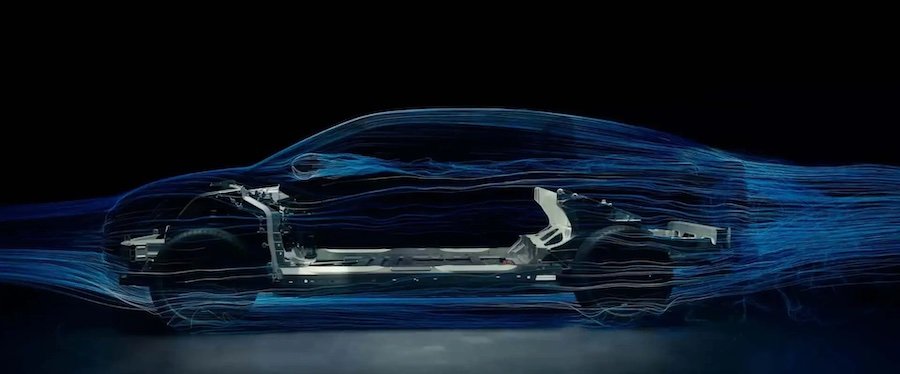
Today's teaser video is called "Ford Bounty Hunters" and it's a look at the different things that automakers focus on when efficiency actually matters to them. It's about improving aerodynamic performance, because unlike gas engines, wind tunnel time is cheaper than battery cells.
An EV battery can be 40% of the cost of an electric vehicle, Ford's spokesperson said. It makes reducing the size of the battery a big deal, because it has the largest single impact on price. But you can't just slash the pack, because buyers want more range than their gas cars.
Enter Ford's bounty hunters. Unlike Stephanie Plum or Duane Chapman, these bounty hunters don't have to bring back a body, and it doesn't sound like they get paid for completing a conquest. What they do is to examine aero performance and part cost prices on a broader level. Traditionally, adding a dime in cost here to save a few extra pennies there was a non-starter. Ford insists that is no longer the case. Spending more cash to make parts lighter or more aero-efficient is now a good thing, if it can cut the cost of the battery pack enough to pay for itself.
Ford says it has hired aerodynamicists from Formula 1 to try to cut drag. Which makes sense, since drag is by far the biggest impact on range unless you feel like driving 30 mph everywhere. Cutting the roof height by 1 millimeter cuts the battery cost by $1.30, Ford says. Changes to the underside add 4.5 miles of range, too. Then there are the changes that feel like we should have seen decades ago, like motors mounted lower to reduce the angles of the axles. According to Ford, that cuts friction and it makes the parts more durable.
Even the mirrors have been given a once-over. They're smaller, not from shrinking the glass, but from integrating the fold and adjust motors into one, and tilting the entire mirror instead of just the reflector. That one got 1.5 miles more range. We wonder how much more could've been added with simple manual-folding mirrors?
Do the differences really add up? Ford says that if it put the same battery pack in its new design and the "most efficient midsize gas truck" that its new design would get 50 miles more range, and do 30% better on the highway. Midsize, here, means the Hyundai Santa Cruz, Ford's graphic says. Take that as you will.
Weight matters too, so Ford has worked to make it lighter. There's nothing revolutionary here; Ford is planning to use larger so-called Unicasting sections. Ford will cut the chassis from 146 parts in a current truck to just two, with fewer fasteners, welds, and reinforcements needed. Ford claims 27% less casting weight than Tesla's Gigacasting. The line will even use fewer factory robots, because the chassis doesn't have dozens of seams that need sealing or joining.
Lastly, Ford is using a cheaper battery. LFP, which doesn't need cobalt or nickel. The pack itself is built into the truck instead of a separate large part. Individual cells are dropped in place, cutting costs and weight. The wiring harness is nearly a mile shorter than that of previous Ford EVs. Moving to 48V instead of 12V helps, letting Ford use thinner wires for the same power and cutting more weight (and copper) too.
You'll forgive us for not getting overly excited, though. Ford made big claims ahead of the launch of the Lightning. It then arrived late, at much higher prices than reservation-holders were told, and in time for electric vehicles to become one of the strangest modern political friction points.
The new truck is set to launch next year, along with the new platform. Ford has said repeatedly that it expects pricing to start around $30,000. That could make it the cheapest model in Ford's lineup, with the Maverick edging closer to $30,000 each year.
Related News
