All-New BMW i3 Debuts As 440-Mile Electric 3 Series with Near-M3 Power
Key Points
- The 2027 BMW i3 debuts as an AWD electric sports sedan, inspired by Vision Neue Klasse.
- Delivers 463 hp, 440-mile estimated range, and reimagined interior design.
- Production starts August, deliveries in the fall.
Every time there’s a new BMW 3 Series, the world sits up and takes notice, and this time is no different. Munich’s benchmark sports sedan has gone electric, adopting the i3 moniker previously used on the automaker’s first mass-produced EV, the i3 supermini, but fear not, a combustion-powered 3er will come along soon enough. If you’re not here because you’re interested in EVs, it’s because you want to critique the new Bimmer’s styling, and that’s okay, because every 3 Series’ appearance is loved and hated in equal measure. This one takes clear inspiration from the Vision Neue Klasse concept, just as the first Neue Klasse product, the iX3, took its design cues from the Vision Neue Klasse X concept. But style matters less than substance, so let’s see what the Bavarians have brewed.
2027 BMW i3 Arrives as AWD Electric 3 Series
Like the iX3, the new (NA0) i3 launches in 50 xDrive form first, which means an electrically excited synchronous motor on the rear, primary drive axle, with an asynchronous motor on the front axle. Using sixth-generation BMW eDrive technology, the 800-volt setup delivers a combined total of 463 horsepower and 476 lb-ft of torque. That’s just 10 horsepower less than the manual, non-Competition G80 M3 offered when it arrived, and it should translate to scintillating performance, though BMW hasn’t revealed any acceleration times or top speed figures just yet. BMW estimates that the new i3 will manage 440 miles on the EPA’s test cycles and says the EV will be capable of DC charging at up to 400kW, which is up to 30 percent faster than Gen5 tech managed. If the iX3 is anything to go by, real-world figures may be even higher. The battery pack’s cells are directly integrated into the pack, and the pack itself is directly integrated into the chassis, which translates to improved torsional rigidity and less overall weight. It also allows for a flat floor, improving aerodynamics, and the car can do bidirectional charging, feeding your home or devices when there’s no other source of electricity.
BMW i3 Neue Klasse Styling: Hit or Miss?
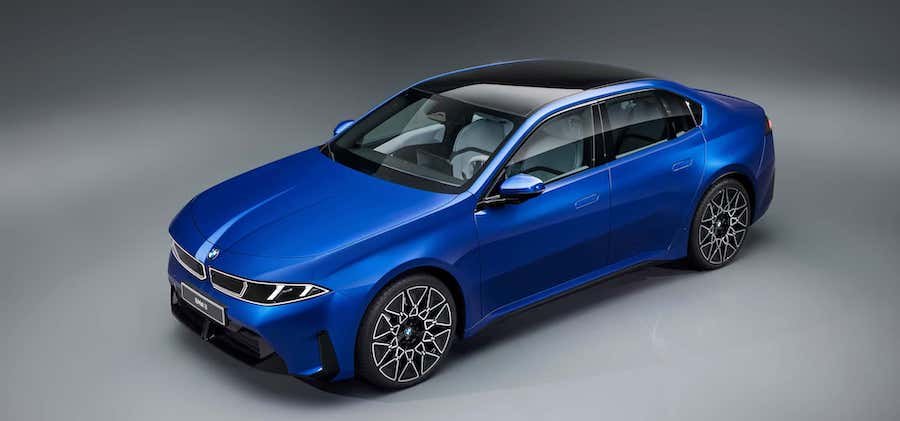
The big news is the new front end, where the ‘kidney’ grille outlines have become a part of the headlights, surrounding each as a sort of mask, with a recess between them. This recess leads into a valley that creates two bulges for the hood, making it appear longer and more muscular. Optionally, Iconic Glow lighting can be had, offering three lighting animations: Relaxed, Excited, and Balanced, and depending on the spec of the vehicle, the welcome and goodbye animations will vary. Lower down, the separated intake leans deeper into the dual-grille look, while the lower side air intakes help bridge the design gap between the NA0 and the G20. Muscular wheel arches are clean and simple, and that’s the theme of this design, which incorporates hidden window seals. That leads us to the windows themselves. For the first time this writer can remember, the BMW press release makes no mention of a Hofmeister kink. The i3’s predecessor, the G20 3 Series, was already fiddling with the iconic design cue, and now it’s almost completely unrecognizable, with the bottom of the C-pillar flicking up to accentuate the rear haunches. It’s not a bad look, but the unusually large third side window looks awkward the longer you stare at it. Still, this should make for a comfortable rear-seat journey with the windows down, as will the standard panoramic roof with climate comfort glass (which means the eventual M model will not continue the recent tradition of a carbon fiber roof).
The wing mirrors are not overstyled, and the rocker panels are classy, while flush door handles add to the sleek look but will get the car banned in some markets. These automatically extend when the Digital Key Plus (using any major smartphone or smartwatch) is detected, and this key can be shared via messaging apps, meaning others can use the car even if you’re not around. This uses Bluetooth and Ultra Wide Band technology to accurately determine exactly where the signal is coming from and can also remotely operate the trunk. Around the back, the taillights match the headlights in that there’s a recess for the BMW roundel between them. These taper near the middle and flick up at each extremity as a reinterpretation of the traditional L-shaped taillight motif of every 3er since the E46. Below them, the number plate recess has been made to look like a design choice rather than a necessity, and the false diffuser panel (integrating the reverse light) adds sportiness. This blends into a pair of upright reflectors to match the front lower side intakes. As usual, an M Sport pack is available, adding the M Aerodynamic package, an M logo to the wing mirrors, and the option of blue calipers for the M Sport brakes. The busy wheels on this model have little covers between the spokes for better aero efficiency, but more designs will be seen soon enough.
This launch model of the i3 is the first to offer M Le Castellet Blue metallic paint, which is exclusive to the i3, but if you don’t like it, a total of 11 solid, frozen (matte), and metallic options will be offered. A purported leak from December last year claimed that these would include Alpine White (as usual), Black Sapphire, Brooklyn Grey, and Space Silver, with Mineral White, Fire/Vegas Red, Polarized Grey, Ocean Wave Blue, and Eucalyptus Green also mentioned. Hopefully, we’ll get to see these shades soon. We’re particularly interested in seeing Black Sapphire, as it could make the car look more aggressive.
2027 BMW i3 Interior and Technology
Somewhat controversially, the steering wheel has four spokes, with the upper section gaining a spoke for the first time on a 3 Series. An optional M Sport wheel with a “flattened” design will also be offered with 4 and 8 o’clock spokes. It’s a strange look, but it certainly makes the i3’s cabin feel more futuristic. As with the iX3, the new i3 gets the Panoramic Vision infotainment setup with a 17.9-inch display in the center of the dashboard angled toward the driver, with up to six movable and customizable widgets. This is complemented by a narrow continuous display stretching across the base of the windshield, with a 3D head-up display optional. The system includes a self-learning voice assistant with Amazon Alexa+ AI, and the interface allows for customizable colors, display schemes, and background images.
Speaking of choices, the cabin offers multifunction and M Sport seats as options and can be trimmed in various themes. Contemporary gives you Veganza imitation leather in Agave Green, Digital White, Castanea, or Black coloring, and the M Design World theme pairs Black Veganza with M Performtex material. Alternatively, BMW Individual provides real Merino leather in black, and the aforementioned leak from last year said this could be joined by an Adelaide Grey two-tone color scheme. We’ll see soon enough, with production beginning in Q3.
Whatever you choose, a wireless device charging pad is included, as are physical buttons for the hazard warning lights and the parking brake. This brings us back to the wheel, which integrates what BMW calls “Shy Tech,” with buttons that only activate when their functions are required. Some may prefer a more analog feel, and we’re not sure about having electric door latches front and rear, but we’ll have to wait to drive the car to give our verdict on how all this feels on the road. A flat trunk floor with collapsing rear seats should mean decent practicality, but we can’t help but be disappointed at the size of the frunk—it’s tiny. Still, at least it’s an out-of-the-way place to put the charging cable, which you connect to a standard NACS port on the right rear of the car.
Production will begin in August of this year, with deliveries in the fall, but pricing and options will only be unpacked closer to pumpkin spice season. With all of that, from incredibly efficient motors to a wholly reimagined user interface, and a massive increase in the use of recycled materials, the main talking point will still be the looks. So, what do you think? Did BMW cook, or is its styling department cooked? Let us know in the comments below.
